
The GPS100
The GPS100 supports satellite positioning used by compatible em-trak equipment and provides a reliable option where an internal GNSS antenna cannot achieve the required reception.
There was an issue adding the product to your basket. Please close this window and try again.

Marine Communication
A correctly selected and installed antenna system is essential for reliable marine communications. VHF radios, Digital Selective Calling (DSC) and Automatic Identification System (AIS) equipment rely on VHF radio signals to communicate with vessels and shore stations.
Discover All ProductsA good antenna installation can significantly affect transmission and reception performance. Antenna type, mounting height, cable quality, frequency coverage and the position of the antenna on the vessel all need to be considered. GNSS antennas perform a different role. Rather than transmitting marine communications, they receive satellite signals that allow compatible marine equipment to determine accurate position and timing information.

Understanding these differences makes it easier to select the right antennas, splitters, cables and mounting accessories for your marine electronics installation.
VHF voice radio and AIS both operate within the marine VHF band, but at different parts of that band.
For an AIS-only installation, the VHF antenna should be suitable for operation around the AIS channels at approximately 162 MHz. Where the same antenna is being shared between AIS and a VHF voice radio using a compatible antenna splitter, the antenna should provide suitable performance across the wider marine VHF range of approximately 156–162 MHz.
Antenna placement is equally important. Marine VHF communication is predominantly line-of-sight, so mounting an antenna higher and with fewer obstructions will generally increase effective range. The antenna should be installed vertically and positioned away from large metal structures, other transmitting antennas and sources of electrical or radio-frequency interference wherever possible.
Antenna gain should also be appropriate for the vessel. Higher-gain antennas concentrate more of the transmitted energy into a narrower vertical radiation pattern. This can be useful on relatively stable vessels but is not automatically better for every installation. On sailing boats or vessels that roll or pitch significantly, a lower-gain antenna with a broader vertical pattern can provide more consistent performance as the vessel moves.
For this reason, the best antenna is not simply the longest or highest-gain option available. Vessel type, mounting position, operating environment and compatibility with the connected equipment all need to be considered.
To complete your onboard communication setup, explore our range of VHF marine radios designed for reliable communication and safety at sea.
AIS transceivers require accurate position and timing information from a Global Navigation Satellite System (GNSS). Depending on the product and its installation position, this may be provided by an integrated GNSS antenna or an external antenna.
Integrated GNSS antennas can work effectively where the equipment has a suitable view of the sky. When the transceiver or radio is installed below deck, inside a console or in another position where satellite signals may be obstructed, an external GNSS antenna can provide improved reception.
The GPS100 supports satellite positioning used by compatible em-trak equipment and provides a reliable option where an internal GNSS antenna cannot achieve the required reception.
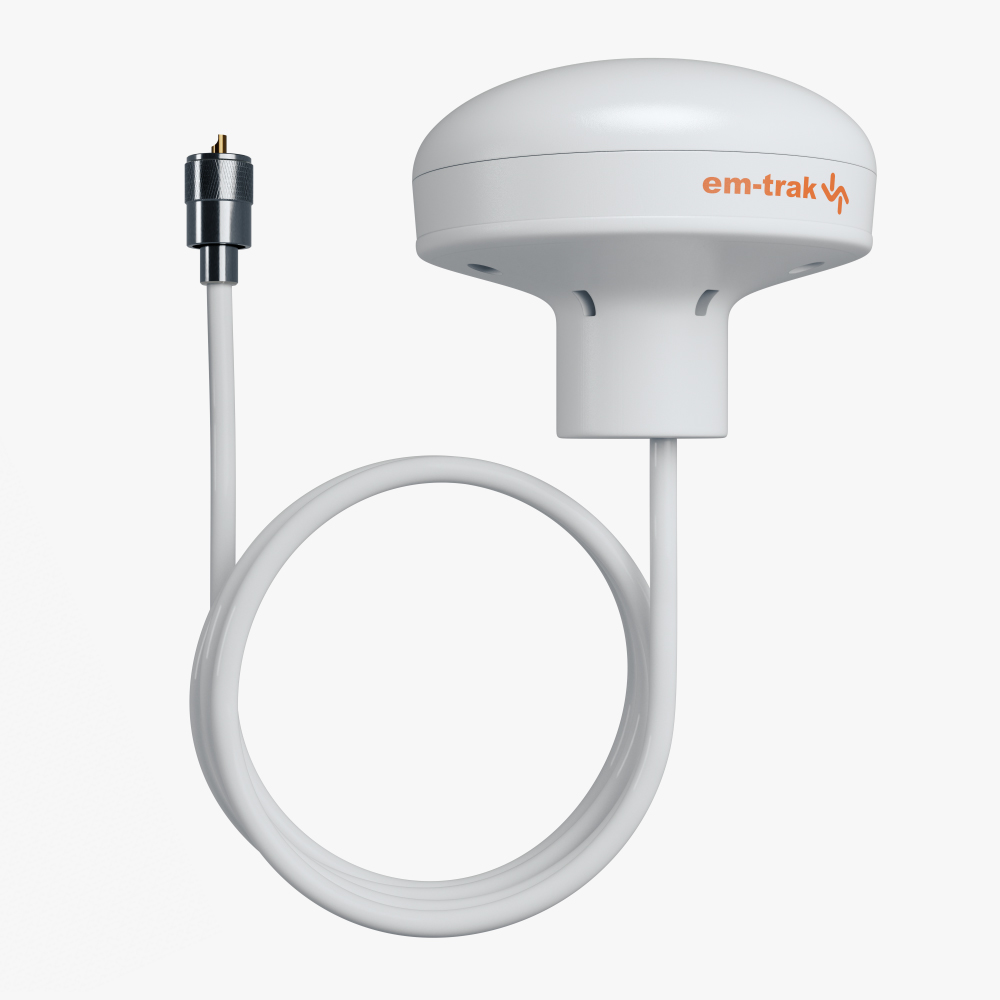
The em-trak GPS100 is an external GNSS antenna designed for use with compatible em-trak Class A and Class B AIS transceivers and integrated marine communication products. Its compact, waterproof design allows it to be surface, or pole mounted in a position with a clear view of the sky.
A VHF antenna splitter allows compatible AIS and VHF equipment to share a single marine VHF antenna, reducing the need to install separate antennas and additional antenna cabling.
An active AIS/VHF antenna splitter does more than simply divide an antenna signal. It manages access to the antenna so that connected transmitting equipment can operate safely and effectively.
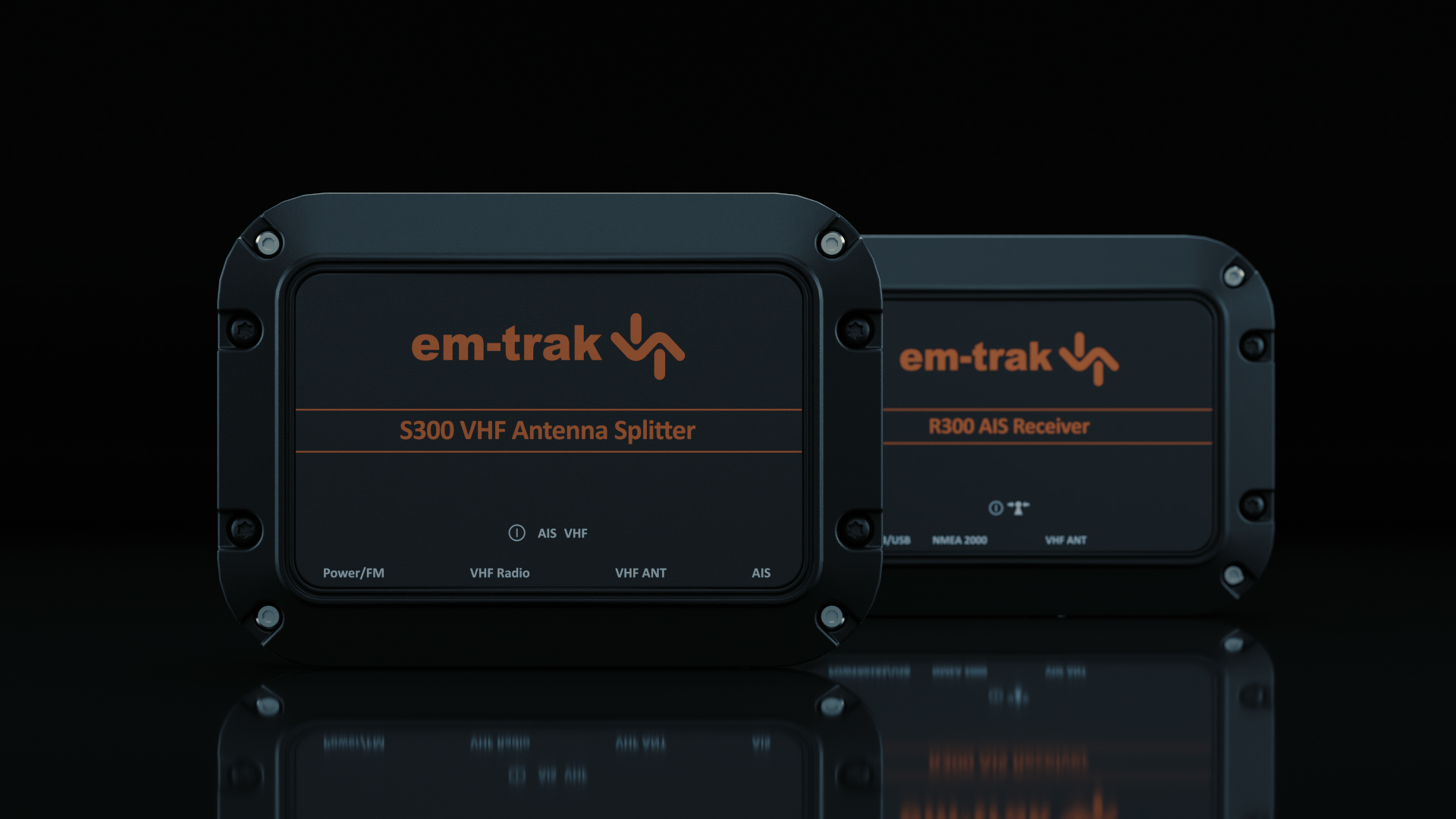
The em-trak S300 VHF antenna splitter is designed primarily for compatible Class B AIS transceivers and AIS receivers. It allows a VHF radio, AIS device and FM broadcast receiver to use a single suitable marine VHF antenna.
The S300 actively switches the antenna between AIS and VHF operation. If power to the splitter is lost, the system defaults to maintaining the connection for VHF voice communications.
When an antenna is shared between AIS and VHF voice equipment, it is important to use an antenna that provides suitable performance across both applications, covering approximately 156–162 MHz.
AIS Class A installations are different. A Class A AIS transceiver such as the em-trak A200 must be connected to its own dedicated VHF antenna and must not share an antenna with other equipment through an AIS/VHF antenna splitter.
The coaxial RF cable between a VHF or AIS device and its antenna is an important part of the overall antenna system.
Every coaxial cable introduces some signal loss, and this loss generally increases with cable length. Poor-quality cable, excessive cable runs, damaged connectors or badly terminated connections can reduce both transmitted and received signal performance.
For shorter marine VHF antenna cable runs, cables such as RG-58 or RG-8X may be suitable depending on the equipment and installation. For longer runs, a lower-loss cable such as RG-213 may provide improved performance.
Cable choice should always take into account the equipment manufacturer’s requirements, installation length, connector type and marine environment.
It is important not to confuse RF antenna cable with data or power cabling. VHF coaxial cable carries radio-frequency signals between the equipment and antenna. Separate electrical cables provide power, while NMEA 0183, NMEA 2000 and other supported interfaces transfer navigation and vessel data between compatible onboard systems.
Modern AIS transceivers and integrated marine communication products can connect with chartplotters, multifunction displays and other onboard electronics through interfaces including NMEA 0183 and NMEA 2000.
The type of data cable required will depend on the equipment being connected and the interfaces supported by each device.
Power cabling is equally important. Cable size should be appropriate for the required current and cable length to prevent excessive voltage drop, particularly when transmitting.
For Class A AIS installations, additional interfaces may also be required. A pilot plug, for example, provides an interface for a marine pilot’s Portable Pilot Unit to access AIS and relevant vessel information from the bridge.
Always refer to the installation instructions for the specific AIS or VHF product before selecting power, RF or data cables.
Correct mounting helps protect marine communication equipment from movement, vibration and the harsh conditions experienced on board.
Mounting brackets allow VHF radios, AIS transceivers and displays to be installed securely in a suitable operating position. For products such as the em-trak A200 and B400, dedicated mounting brackets provide a secure and compact installation option.
Antenna mounting requires equal consideration. VHF antennas should normally be mounted vertically, as high as practicable and clear of nearby obstructions and transmitting equipment. External GNSS antennas should be installed where they have a clear view of the sky and are suitably separated from potential sources of interference.
Cable routing also matters. Avoid unnecessary cable length, protect cables from physical damage, and ensure connectors and connections are appropriate for the environment in which they are installed.
A well-planned installation can improve system performance, minimise interference and help ensure reliable communication when it is needed.
Choosing the right antenna system depends on the equipment being installed, the vessel and the way it will be used.
AIS-Only Installations: Where an AIS transceiver has its own dedicated VHF antenna, select an antenna that is suitable for AIS operation, around 162 MHz. The antenna should be mounted as high as practicable and in a position clear of significant obstructions and sources of interference.
Combined AIS and VHF Installations: Where compatible Class B AIS and VHF voice equipment share an antenna through a splitter, the antenna needs to perform effectively across the wider marine VHF frequency range, approximately 156–162 MHz. A suitable active splitter such as the em-trak S300 can then manage access to the antenna between the connected AIS and VHF equipment.
Class A AIS Installations: Class A AIS transceivers require a dedicated VHF antenna. A Class A installation should therefore be planned separately from the vessel’s VHF voice-radio antenna system rather than using an AIS/VHF splitter.
Antenna Gain and Vessel Type: Antenna gain should be selected according to the vessel and installation rather than assuming that higher gain will always provide better performance. On vessels that experience significant roll, pitch or heel, a lower-gain antenna with a broader vertical radiation pattern can help maintain consistent coverage. Higher-gain antennas provide a narrower vertical pattern and may be appropriate for more stable installations.
In all cases, antenna height and a clear installation position are major factors in achieving good VHF and AIS range.
Cable Length and Installation: Long RF cable runs introduce greater signal loss, so cable routing should be kept as efficient as reasonably possible.
Short installations may use suitable RG-58 or RG-8X coaxial cable, while longer cable runs can benefit from lower-loss cable such as RG-213. Always check the requirements for the specific product being installed.
Compatibility: Before installing any antenna, splitter or cable, check that it is compatible with the connected equipment. Important considerations include frequency coverage, impedance, connector type, power handling, cable loss and whether the equipment is permitted to share an antenna.
Using the correct components protects the equipment and helps ensure the AIS or VHF system performs as designed.
em-trak marine electronics and accessories are designed to work together as complete, reliable onboard systems.
From AIS and VHF antenna management to GNSS positioning, data connectivity, power and mounting, selecting compatible components helps ensure the equipment performs as intended and simplifies installation.
With solutions for recreational craft, commercial vessels and professional marine installations, em-trak provides AIS, VHF and supporting accessories engineered for dependable performance in demanding marine environments.
For help selecting the correct antenna, splitter, cable or accessory for your em-trak equipment, contact our technical support team or your local em-trak dealer.
Our AIS vessel selector can help you find the best AIS transceiver for you.
Take the quiz