
The main marine VHF channels are:
Channel 16 – this is the international distress, safety and calling channel. Channel 13 – this channel is used worldwide primarily for ship to ship navigation safety communications.
There was an issue adding the product to your basket. Please close this window and try again.

VHF Radio with AIS
VHF marine radios are the preferred form of communication at sea due to their ease of use, reliability, safety and immediacy when it comes to crisis. They are specifically designed to withstand demanding environments, making them the ideal communication method.
Discover All ProductsThey are specifically designed to withstand demanding environments, making them the ideal communication method for life on the water.
Providing two-way communication between vessels, VHF radios are standard equipment for both recreational sailors and commercial vessels, with integrated VHF / AIS systems providing additional safety features. Combined, these support collision avoidance and improve situational awareness by showing information about AIS-equipped vessels.
VHF radios can range from compact, handheld models, through to more advanced solutions that allow users to communicate, identify, and send DSC distress signals for the ultimate peace of mind on the water.

VHF marine radios are a crucial piece of equipment for safety at sea. Operating as a two-way communication system, they allow vessels to connect with other boats, marinas, coastguards, and even to receive and transmit information, such as weather reports and hazards, operational requests, ship-to-ship comms and emergency assistance.
By utilising radio frequencies, they are not reliant on cell tower signals, making them more reliable than mobile phones, and their durability means they thrive in all weather conditions. VHF radios operate using ‘line-of-sight’ transmitters and receivers. As signals travel in a straight line, range can be anywhere between 5 and 30+ nautical miles; this is also dependent on several other factors:
Operating via specific marine channels and using a push to talk button, communication is easy, and seamless.
VHF (Very High Frequency) operates in a specific range (between 30 – 300 MHz), with wavelengths from 10 to 1 metre. Higher frequencies means faster data transfer, making this range ideal for instantaneous short and medium-range communications. Due to regulations, radio wave limitations and standardised communication requirements, marine VHF radios have a specific frequency range, operating between 156 – 174 MHz.
As part of marine communications, there are various standardised channels that serve specific purposes. This is to ensure onboard safety and effective navigation. The main marine VHF channels are:
Channel 16 – this is the international distress, safety and calling channel. Channel 13 – this channel is used worldwide primarily for ship to ship navigation safety communications.
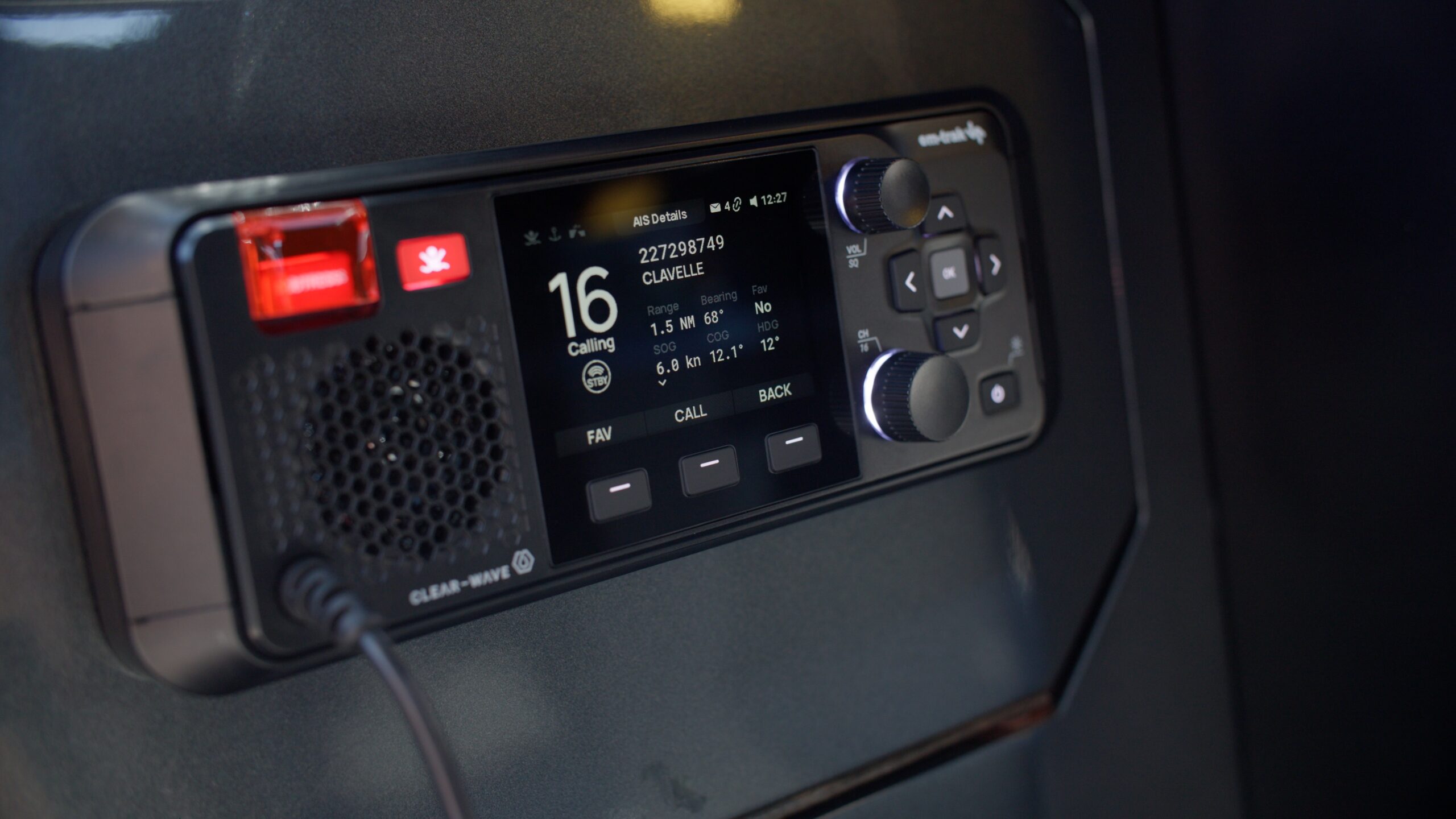
Depending on your personal or regulatory requirements, there are three core types of marine VHF radio: fixed, handheld and integrated. Fixed VHF radios are installed at the helm of the vessel and have a higher power output, with a longer range. Handheld devices are suited to smaller vessels; battery-powered and portable, they have a shorter range and some offer a distress channel button for safety.
Integrated VHF systems are more comprehensive, and feature technology such as AIS (Automatic Identification System) for additional safety. Products with wireless capability, such as the X100, provide vessels with a modern solution that blends VHF, DSC and AIS for complete peace of mind when out on the water.
There are multiple aspects to consider when choosing a VHF marine radio. Some of the key considerations are:
AIS automatically transmits information such as a vessel’s identity, position, course and speed using VHF radio frequencies. When combined with VHF/DSC in an integrated marine communication system, AIS can significantly improve situational awareness by allowing the user to see and identify AIS-equipped vessels nearby, monitor potential collision risks and, on compatible systems, make direct DSC calls to selected AIS targets.
AIS complements rather than replaces traditional navigation, visual lookout and VHF communication.
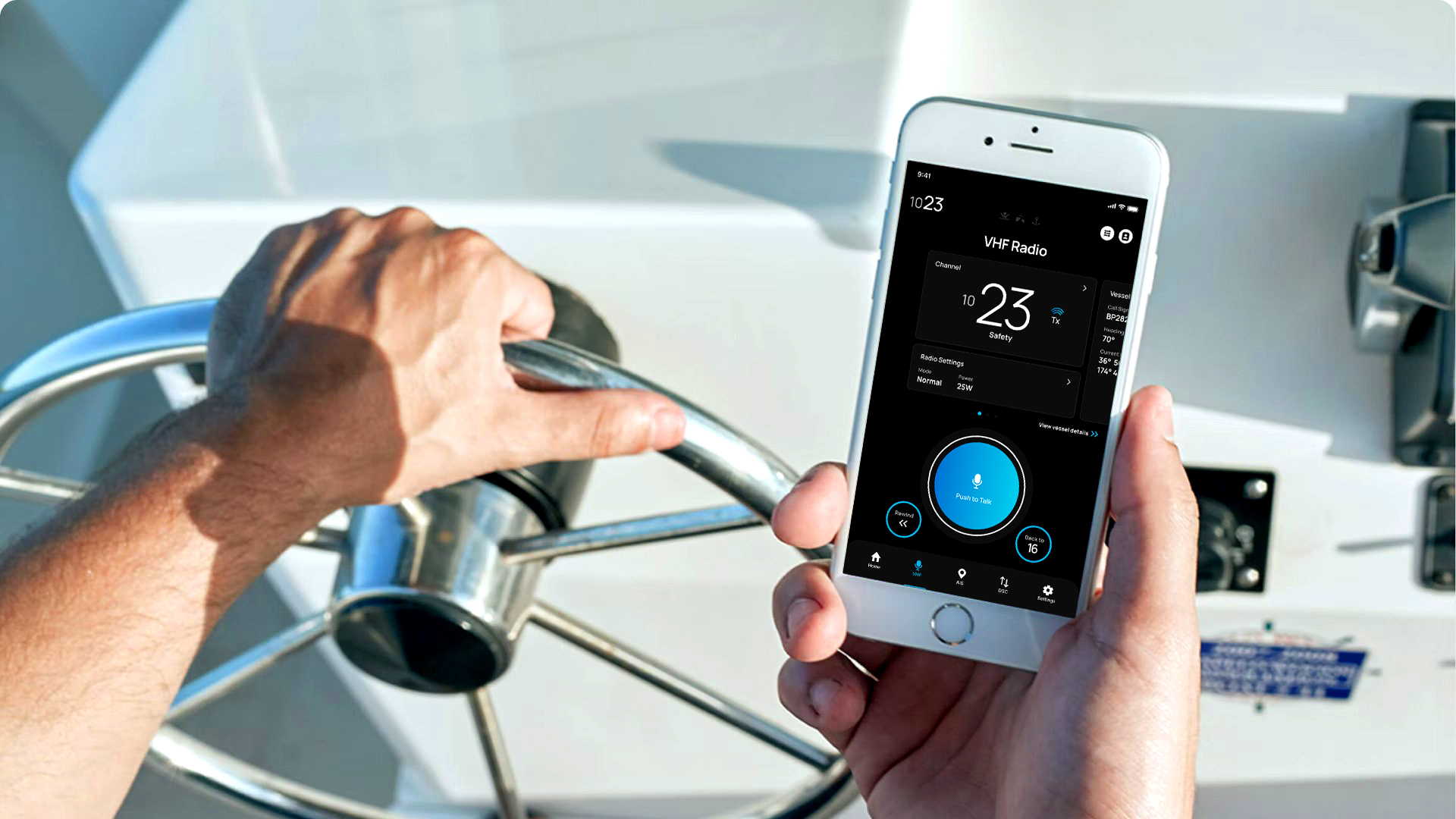
Due to their enhanced safety features, integrated VHF marine systems are a popular choice with many captains and sailors. Radios such as the X100 VHF/DSC/AIS marine radio are engineered without compromise, so vessels can benefit from a rugged and durable radio that blends powerful VHF, DSC, and AIS technology with intuitive wireless control for complete peace of mind when at sea.
With NMEA2000 and 0183 integration, Clear-Wave™ digital audio, built in GNSS and dual, tri, or custom tri-channel monitoring just the beginning of the technical specifications, the X100 is built to thrive in the harshest of environments.
Since inception more than two decades ago, em-trak has consistently designed, engineered, and manufactured marine communication products that perform flawlessly in the real world. Trusted by professional mariners, commercial operators, and leisure boaters alike, em-trak products are engineered to deliver the very best in performance, reliability, and user experience across AIS and integrated.
Depending on your specific VHF radio and antenna height, you can expect varying ranges. A battery-powered, handheld radio may reach between 3 and 5 nautical miles on open water, whereas a more powerful, fixed unit with a good, 3 dB antenna mounted at the masthead of a sailing yacht, can reach 30+ nautical miles.
Channel 16 is the international channel for distress calls and notification of emergencies. This was designated by the International Telecommunication Union (ITU) to ensure immediate response and universal usage.
In the UK, marine radio equipment normally needs to be covered by an appropriate Ofcom Ship Radio or Ship Portable Radio Licence. A vessel’s fixed marine VHF installation is normally covered by a Ship Radio Licence, which can be obtained free of charge when applying online through Ofcom. In addition, anyone controlling the operation of a marine VHF radio must hold, or be under the direct supervision of someone holding, the appropriate Maritime Radio Operator’s Certificate of Competence.
For most recreational users of VHF and VHF/DSC, this is the RYA Short Range Certificate (SRC). Requirements vary between countries, so users cruising outside the UK should check the regulations that apply locally.
The best VHF marine radio will be determined by your personal requirements and the size of the vessel. For small boats such as dinghys, a handheld VHF radio is adequate, for RIBS and cruisers that venture further, a basic, fixed VHF with longer range is suitable, but for larger vessels, a fixed-mount Class D DSC VHF marine radio is required for safety and optimal communication.
Radios that integrate AIS as an additional specification provide extra layers of safety support which is worth considering, especially for medium to large vessels.
Some marine communication systems integrate VHF, DSC and AIS within a single unit, reducing the amount of equipment required at the helm and simplifying installation. The em-trak X100 integrates a Class D VHF/DSC radio with a Class B 5W AIS transceiver and an internal VHF antenna splitter, allowing both VHF/DSC and AIS to operate through a single VHF antenna.
Our AIS vessel selector can help you find the best AIS transceiver for you.
Take the quiz